Biblical Scenes From Long Ago!
The view early in the morning after breakfast - no one is around.
 |
| What a gorgeous day! Sights from the back of the Marriott Hotel in Jordan. |
 |
| Joanne and I enjoy an early walk around the pools with the Dead Sea in the background. |
 |
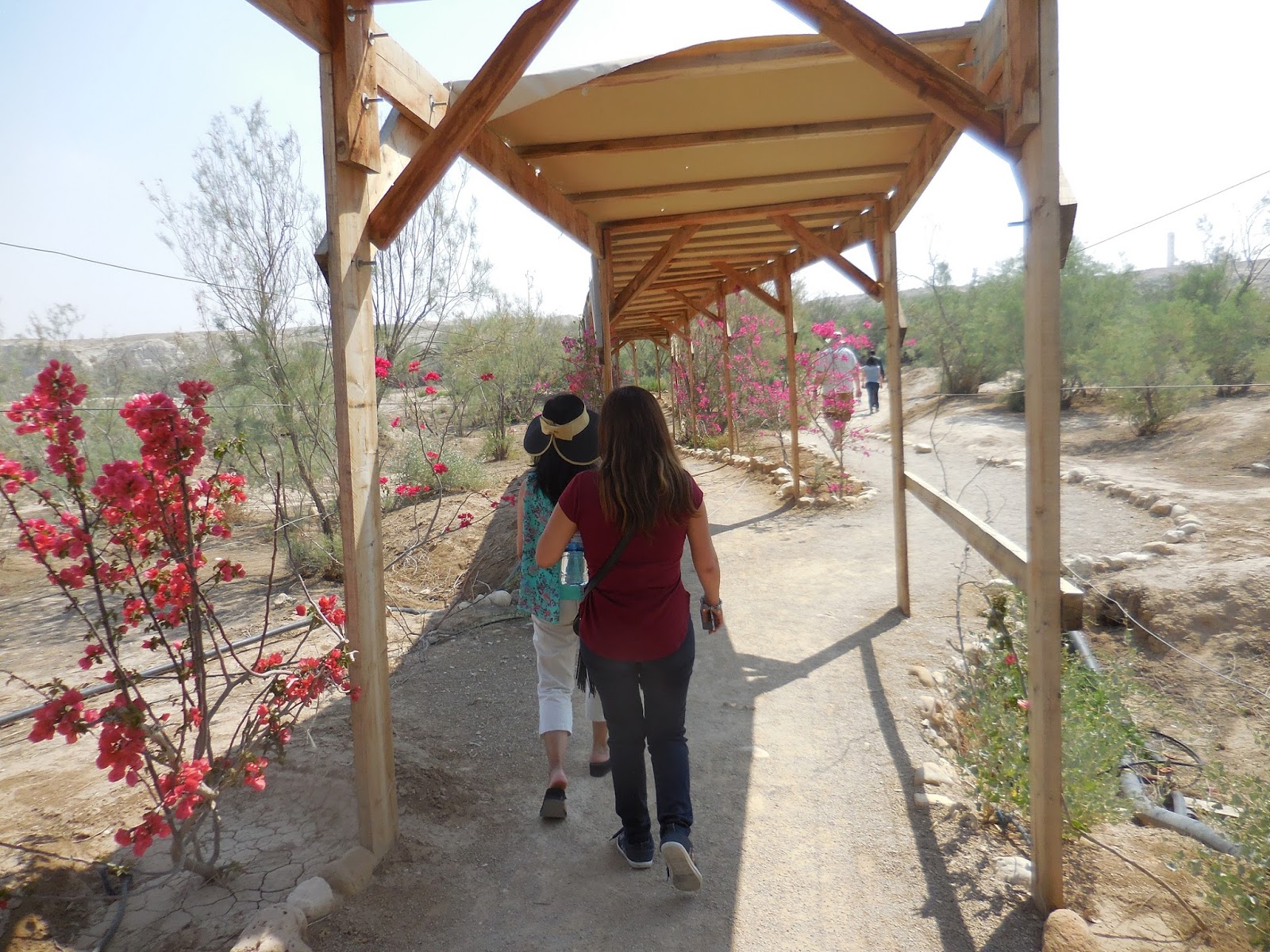
| Hey! The flowers are the same color as my blouse....GORGEOUS! |
Off to Mt. Nebo we go! Moses saw the Promised Land from here.
Up the mountain we go in our bus.
Some sheep grazing on the hillside.
 |
| Some nomad residences along the hillside |
After 40 years leading the headstrong Israelites in the desert, Moses
stood on the windswept summit of Mount Nebo and viewed the Promised Land of Canaan - after having been told by God “you shall not cross over there”.
 |
| The Abu Badd - a rolling stone used as a fortified door of a Byzantine Monastery in the old village of Faisaliyah |
 |
| A wonderful scripture from the New Testament |
 |
| The view from the summit provides a panorama of the Holy Land and, to the north, a more limited one of the valley of the River Jordan. The West Bank city of Jericho is usually visible from the summit, as is Jerusalem & Bethlehem on a very clear day. Moses saw this same view! |
A serpentine cross sculpture atop Mount Nebo was created by Italian artist Giovanni Fantonni. It is symbolic of the bronze serpent created by Moses in the wilderness (Numbers 21: 4-9) and the cross upon which Jesus was crucified. (John 3:14)
 |
| The Brazen Serpent Monument |
 |
| According to the final chapter of the Book of Deuteronomy, Moses ascended Mount Nebo to view the Land of Israel, which God had said he would not enter. Moses also died here. |
 |
| Beautiful mosaics found on Mt. Nebo |
Early Christians from Jerusalem made it a place of pilgrimage.
In the 3rd or 4th century monks from Egypt built a small church on one
of its peaks, Siyagha (a name meaning monastery), to commemorate the end
of Moses’ life.
By the end of the 4th century, an empty “tomb of Moses”
was being shown to pilgrims on the mountain.
 |
| The main mosaic depicts wine-making, hunters and various animals. |
 |
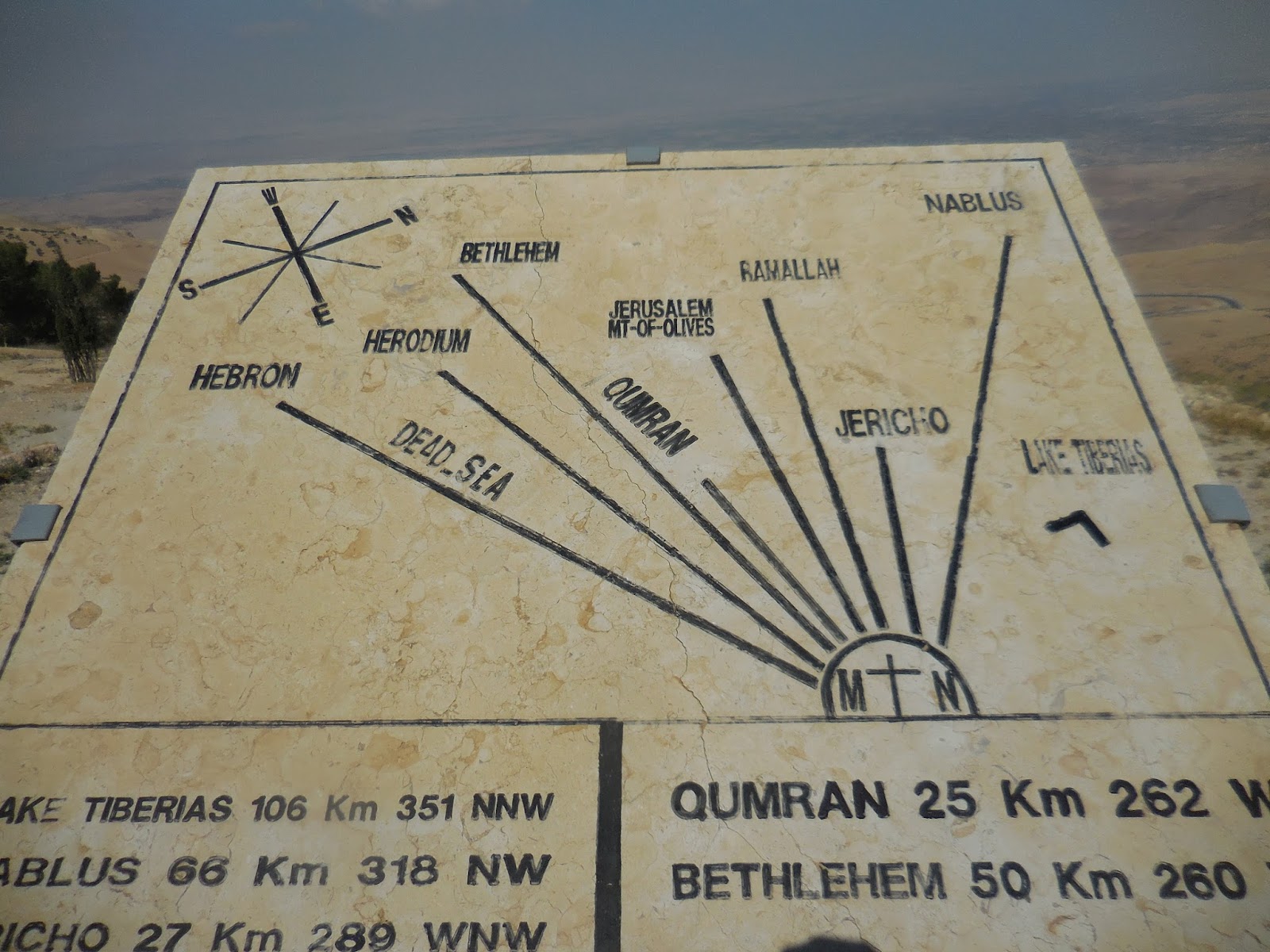
| Plaque showing the distance from Mount Nebo to various locations |
 |
| Interior of the Mt. Nebo church |
 |
| A baptismal font |
 |
| Beautiful mosaics seen inside |
Mosaics seen on the floors inside the Church
 |
| Our tour group enjoys learning from our guide |
 |
| The Pope had this Olive Tree planted here during his visit in 2000 |
 |
| Interesting history here! |
 |
| Some facts about the primitive church here |
 |
| The Pope's visit in 2000 |
Next stop - The art of Mosaics - WOW! It is so time consuming!
This lady gave us a demonstration of what into the work of mosaics. These people still do it today.
 |
| A work like this IS NOT CHEAP! |
 |
| I sure do appreciate all that is put into this, but I will have to just look at these photos. |
Back on the bus to visit Madaba.
Some scenes along the way as we travel through the city.
 |
| Narrow streets! |
 |
| Shopping galore! |
 |
| Always adding on to existing buildings! |
 |
| Parking is a problem! |
 |
| Many wares to sell! |
 |
| Coca-Cola is EVERYWHERE! |
Madaba ("City of Mosaics") is an ancient town in Jordan, southwest of the capital
Amman. It’s known for its 6th-century mosaic map of the Holy Land in the
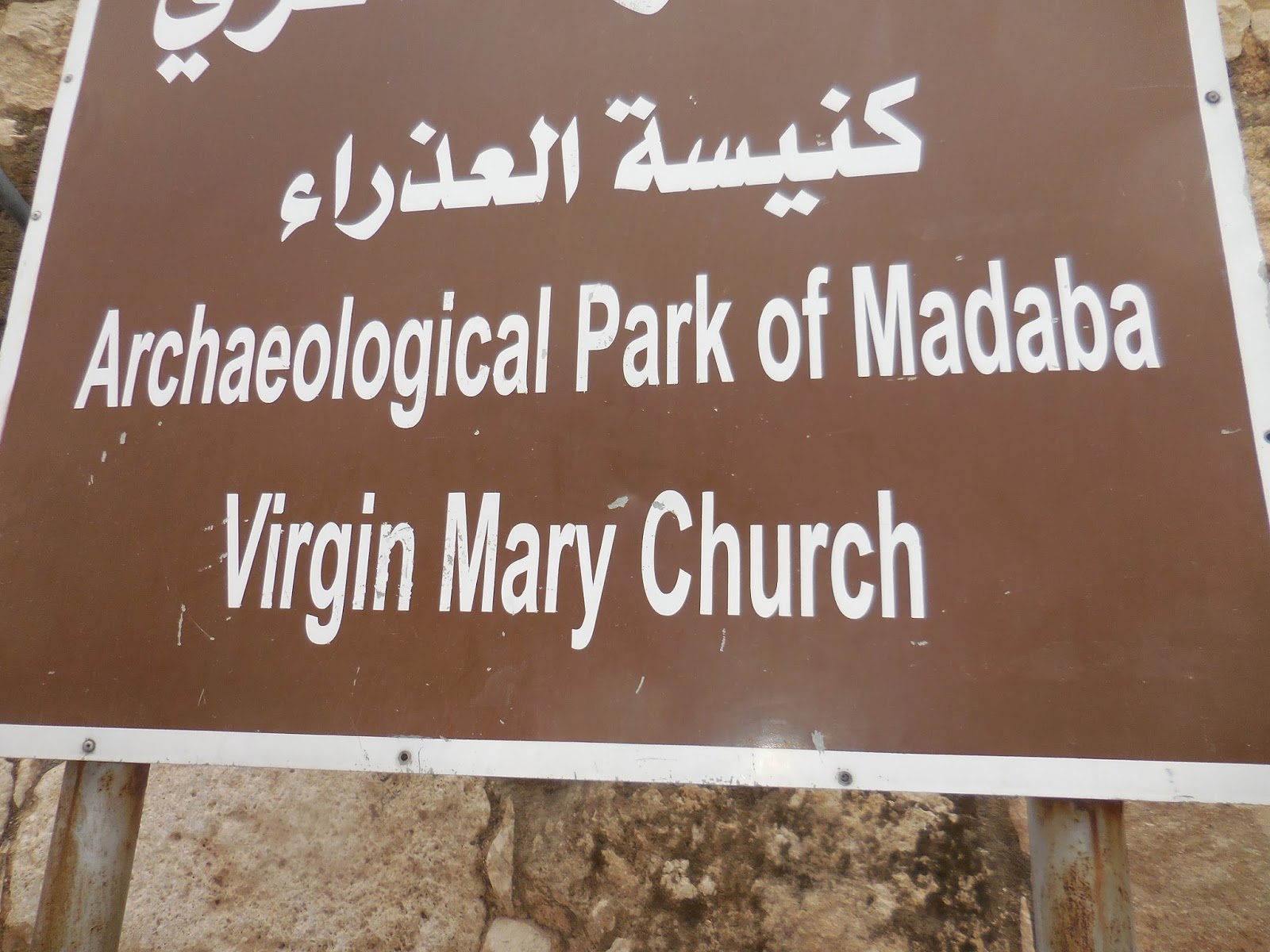
Greek Orthodox Church of St. George. The Madaba Archaeological Park
preserves the mosaic-rich Church of the Virgin Mary and artifacts from
the Hellenistic, Roman, Byzantine and Islamic eras.
 |
| Madaba Archaelogical Museum |
 |
| A mosaic found from the baths of the fortress Machaerus which was built by Herod the Great. Dating from the 1st c. BC, it is the most ancient mosaic in Jordan. |
 |
| Here are some arches and vaults beneath the church that have been excavated. |
 |
| Original cobblestone streets right along here |
 |
| St. George Greek Orthodox Church |
Such beautiful portrayals ALL in mosaic...WOW!
 |
| WOW! Right in front of my eyes! |
The remains of the oldest known map of the Holy Land,
painstakingly assembled from more than a million pieces of coloured
stone lie here on this floor.
 |
| UNBELIEVABLE! |
 |
| THE COOLEST THING EVER! |
Less than a third of the map has survived.
A conservative estimate is that the mosaic map would have originally contained about
1,116,000
pieces of stone and glass. A team of three workmen, working 10-hour
days and directed by a superior artist, would have needed about 186 days
to assemble it.
In 746, about 200 years after the mosaic map was constructed, Madaba was largely
destroyed by an earthquake and subsequently abandoned.
The new settlers were removing debris from an old church in 1884, so
they could build a new one on the site, when they discovered the remains of the map. They incorporated the surviving fragments into the new St George’s Church.
 |
| TWO maps that explain the original mosaic map (an ancient find!) |

 |
| Cousin Lloyd bought Joanne this beautiful mosaic ring from the shoppe. Beautiful! |
 |
| The view from our hotel room window |
Just had to take a couple of photos of our bathroom. Pretty luxurious!
 |
| Taking selfies as the sun begins to go down....refreshing fountains! |
 |
| The sun sets over the DEAD SEA! Pinch me cause I can't believe I'm here! |


 World War I, the fall of the Ottoman Empire, World War II, and then the Palestinian-Israeli Conflict with wars in 1948, 1967 and 1973 made the Baptism Site a no-go area for most of the century.